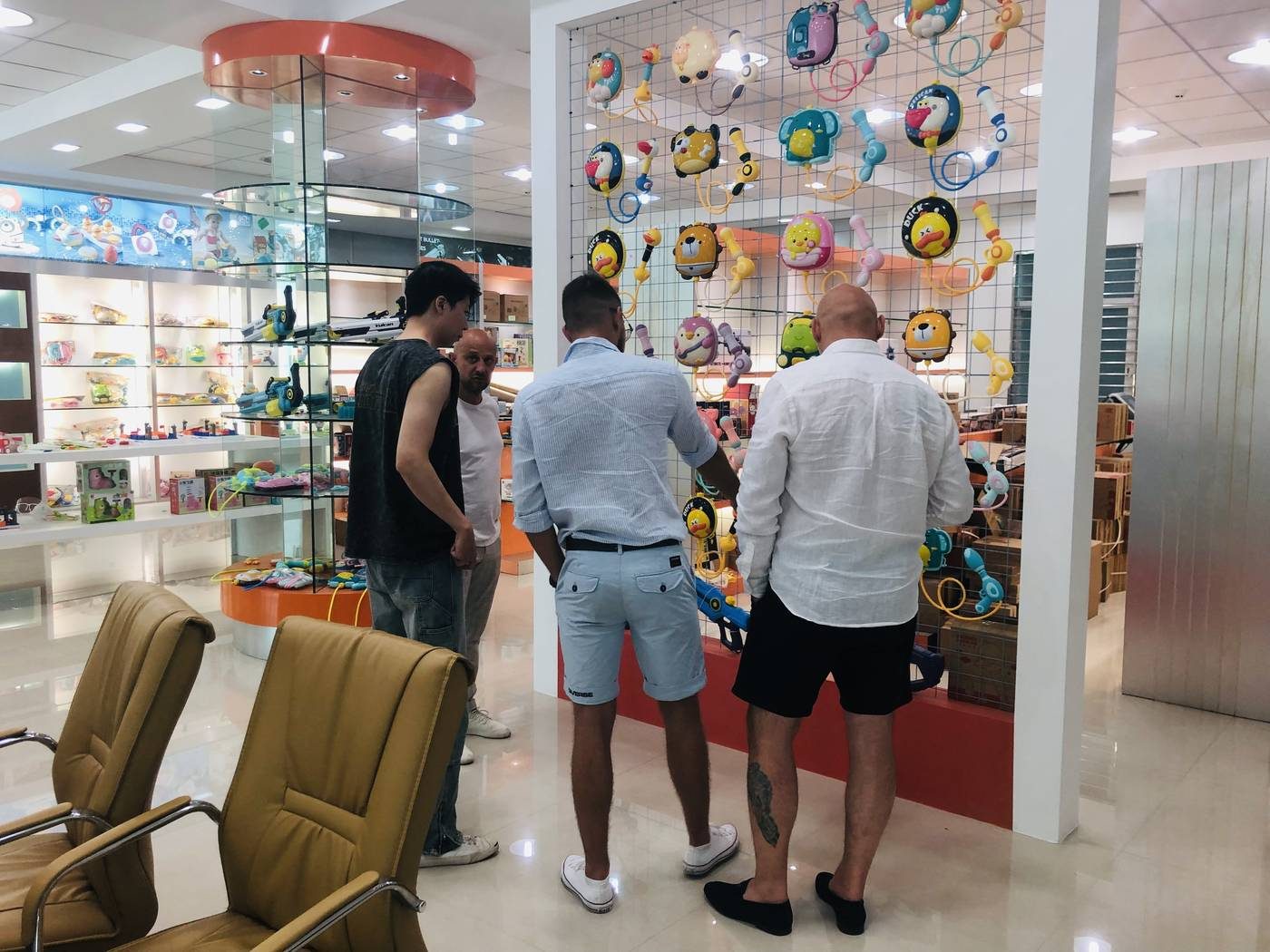
The place is part of the work.
Chenghai is not simply a point on a map beside a product photograph. It is a working toy ecosystem: product ideas, specialized manufacturers, components, decoration, packaging and trading expertise meet across a dense regional supply chain. Buyers who come for one category often discover adjacent possibilities. The challenge is to turn breadth into a range that fits their channel, price architecture, sales calendar and shipping plan.
That is the starting point for ToyOEMChina. We are based in Guangdong's toy hub and work with professional buyers who want a practical way into its supply. A product photo is only the beginning. A buyer also needs to know what is included, what changes from version to version, how the retail package works, how many units fit a carton, what the market file contains and which answers still need confirmation.
We start from the buyer's brief.
A useful brief contains the decisions that shape a real order: destination market, sales channel, target quantity, needed date, product role, packaging and any brand or compliance requirements. With those in view, we can discuss whether a catalog reference is a fit, what should be sampled and whether an OEM or private-label route makes sense.
We keep the conversation item-specific. A request for a rechargeable water toy raises different shipping and label questions from a magnetic construction set. An infant product deserves a different age, small-parts and materials review from a remote-control vehicle. A multi-product order needs carton and consolidation decisions that a single-SKU quote cannot answer.
Strong sourcing is a sequence of decisions.
First, compare the product against the commercial purpose. Next, confirm the sample and version. Then settle the pack, artwork, carton information and destination-market file. Before the order moves, record the approved sample and agreed inspection points. Finally, release only the cartons and documents tied to the purchase order and shipment plan.
This sequence helps buyers see the cost of a change before it arrives late in the process. It also keeps supplier capability, the buyer's expectations and the final product closer together. Some products can use an existing mold and package. Others need a color change, a new artwork round or a fresh feasibility discussion. We do not treat those options as interchangeable.
Chenghai's breadth should make the decision clearer.
Buyers do not need another unfiltered catalog. They need a manageable shortlist, comparable information, a named next step and an honest answer when a detail is not yet known. Our role is to organize that work around the product and order in front of us, using Chenghai's supply network as the place to investigate and the buyer's requirements as the standard to meet.
We ask questions before treating a product as a fit. We request the latest supplier data before quoting MOQ or lead time. We connect any market-document statement to the actual SKU and destination. We look at packaging and carton data before discussing how products can ship together. Those habits make cross-border purchasing easier to review and easier to approve.
Made for long-term working relationships.
The first order is only one point in a buying program. Product availability changes. Packaging artwork evolves. Markets update requirements. Retail calendars move. A useful sourcing relationship leaves a record of what was approved, what was shipped and what should change for the next order.
ToyOEMChina is here for buyers who value that discipline: importers building a dependable range, distributors serving a market, retailers planning a season and brands creating a product identity. If you already know the item, send it. If you only know the customer problem or category, tell us that. The conversation can begin at either end, then move toward the details that make an order real.
What we mean by proof.
We connect product claims to a current product file. We connect a market statement to its destination. We connect an approved sample to the order record. And we connect production and shipment questions to the parties who can answer them. Where a detail has not been confirmed, it stays an open question until the project has a reliable answer.
That discipline is how a place known for making toys becomes useful to the people who need to buy them.
How one district in Guangdong became the toy capital.
The Chenghai story is, in many ways, the story of the modern Chinese toy industry. What began with small workshops, simple plastic parts and family-run assembly lines grew, decade after decade, into a complete industrial system: mold making, injection molding, electronic components, surface decoration, plush and fabric work, printing, packaging and export trading all concentrated inside one district and its neighboring towns. A buyer walking a Chenghai street can pass a magnetic-tile factory, an RC electronics workshop and a packaging printer within minutes.
That density matters more than any single factory. When every specialist supplier sits close to every other, new ideas travel fast: a trend seen in one market can be sampled, adjusted and put into production within weeks. Adjacent categories appear without anyone booking an intercity flight. The industry's memory — which plastics run clean, which electronics are reliable, which packs survive a container — is shared locally. The industry's story is our story because we have spent our working lives inside exactly this system.
A decade and more at the export desk.
The people behind ToyOEMChina bring more than ten years of China toy export experience: hundreds of purchase orders, mixed containers and private-label programs; quotations in EXW, FOB and CIF; market files prepared for the United States, Canada, Latin America, the United Kingdom, the European Union, the Gulf, Africa, Australia and East and Southeast Asia. We have seen a first-time importer's nervous first container grow into a multi-season account, and we have watched a single custom-packed item become a chain retailer's repeat best-seller.
Long experience has a practical value. We know which questions to ask a factory before a price is quoted, how a last-minute artwork revision affects the schedule, and why carton data should be settled before anyone discusses loading. That knowledge is what a buyer is really paying for when they work with a sourcing desk rather than an email address attached to a product photo.
Sourcing desk and factory: two different jobs, deliberately.
A factory is organized around its own machinery and categories; no single production line builds magnetic tiles, RC cars, water blasters, learning games, infant products and squishy novelty. A buying program, however, often needs all six — compared, sampled, packed and shipped together. The desk's role is to keep that program coherent: the right factory for each SKU, the same specification questions asked of every supplier, the packaging and carton plan consolidated, and the market documents tied to the destination rather than to whatever certificate happens to be on hand.
This is also why we do not claim to own every workshop in the cluster. Honesty about who makes what is part of the service: buyers review a clear supplier route, an item-specific file and a named next step at every stage. Where a capability has not been confirmed, the point stays open instead of becoming an optimistic sentence on a page.
The kind of company we intend to keep being.
ToyOEMChina exists to be the desk an overseas buyer returns to — for the next container, the next holiday window, the next rebrand. The product range will change; standards and label rules will update; retail calendars will keep moving. What should not change is the discipline built into these pages: buyer-led briefs, comparable shortlists, approved samples, destination-specific files and a decision trail that reaches the carton and the booking.
If that sounds like the way your own buying team thinks, we are already speaking the same language.