Already selling magnetic tiles or building blocks—and wondering how to leave Hong Kong with an OEM change rather than more catalogues? Fix the play system you understand, then use the fair to investigate a single variable: a clearer building sequence, a different accessory role or a revised presentation.
The Hong Kong Toys & Games Fair runs January 11–14, 2027 at . One magnetic-tile reference makes the development problem tangible: its photograph shows an engineering build, while its written description discusses castles and painting. Before changing instructions or accessories, we need to choose which actual version the OEM request describes.
The products below are catalogue references and supplier descriptions, not confirmed fair exhibits or independently tested performance.
What should we hold constant before walking the fair?
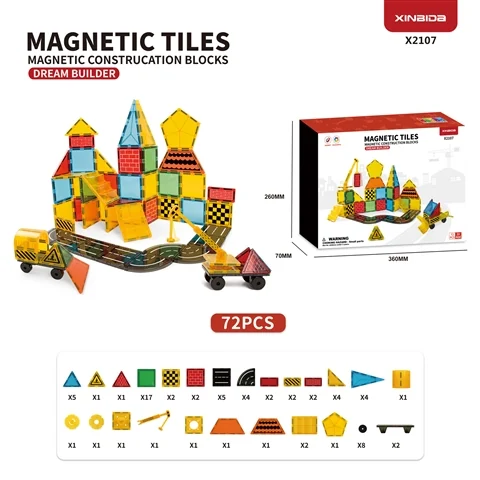
Hold an identified physical version constant before proposing an improvement. illustrates why a name is not enough: the associated photograph carries XINBIDA/X2107 and 72PCS, with colored tiles, roof shapes, vehicles and a road-like build. The written supplier description instead emphasizes castle figurines, translucent colored PC, and no-bake painting with glue, paints and brushes. We do not combine those into a supposedly complete 72-piece inventory.
For a fair meeting, use the photograph to discuss the visible building system and label the written activities separately. The useful first observation is how the pieces create a structure and support vehicle play; painting is a different proposed activity until it is tied to the exact sample and content list. Likewise, the title UV does not establish a UV light source or curing method.
The archived retail box measures 36 × 26 × 7 cm, consistent with the 360/260/70 mm box labels in the photograph, but matching box size does not settle the accessory difference. The master carton is 54 × 30 × 28 cm with 8 sets, 21.8 kg gross/19.8 kg net and 0.045 CBM. Retain those as packing records rather than proof of a particular component selection.
That distinction produces a useful OEM discussion in Hong Kong: an instruction revision for the identified engineering version, or a separate proposal to introduce another activity. Keeping the first version visible prevents an artwork conversation from silently adding glue, figurines or painting materials.
Which construction differences should we examine first?
Examine the joining action before the theme: magnetic attraction and snap-fit assembly are different starting points for an OEM discussion. is titled Pirate Ship, but its original description discusses magic-home and castle scenes. Treat the title and described scene as a version issue; neither establishes the contents of a ship model. The same text specifies a 2.5 × 2.5 × 2 mm permanent magnet in each square block and connection on 4 sides, as supplier statements rather than a measured interface.
Its description identifies a static construction toy without electronics, lights, motors, batteries or charging, keeping attention on the connection and the structures it supports. Its 22 × 20.8 × 2.5 cm retail-box measurement describes the packaged item, not an assembled ship.
The recorded master carton is 46 × 22 × 48 cm with 36 sets, another reason not to transfer packing assumptions between magnetic references.
For contrast, is a 112-piece snap-together ABS flower set: watch how a player locates, orients and joins pieces rather than treating the flower theme as the whole product difference. Its catalogue product dimensions are 42 × 18 × 23 cm; record the displayed arrangement alongside that field when comparing shelf footprints.
The flower set’s separate retail-box dimensions are 35.5 × 22.5 × 9 cm, useful for distinguishing a display-size observation from a packaging change. Our notes should therefore separate connection method, geometry and count, theme/accessory role, and assembled footprint.
What can learning toys add to a building-line brief?
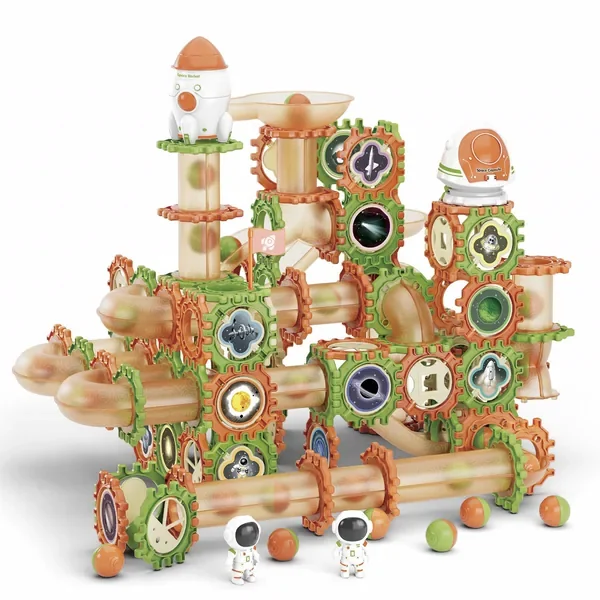
They reveal the activity that follows assembly. The --- family is described as an ABS space-themed marble-run maze/race-track set. Its photograph shows transparent tube sections, circular decorated connectors, funnels, balls and space figures. That is a more specific starting point than the STEM label: in a fair comparison, examine how the route is assembled and where the ball enters and exits, without assuming a motor or a demonstrated gravity-only system.
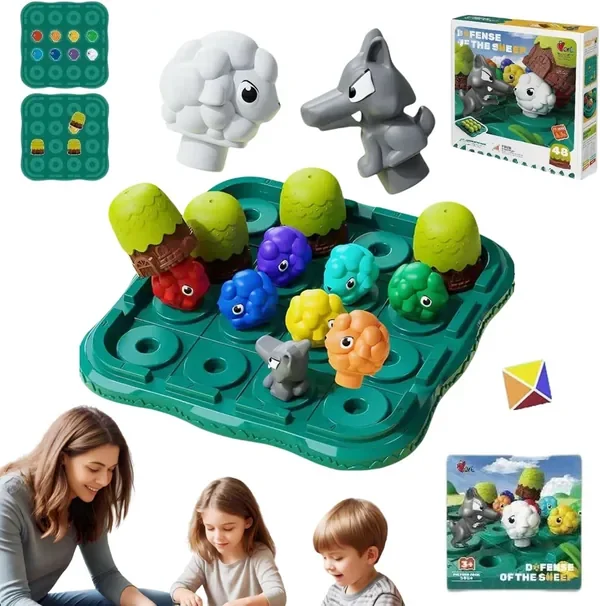
Its recorded 33 × 10 × 25 cm package is a packing reference, not the completed track’s footprint. The Sheep Wolf family, -, offers a different comparison: an ABS memory and color-matching game in which the turn sequence matters more than a construction silhouette.
The Sheep Wolf photograph shows colored figures and a board alongside a 48-challenge graphic; it does not supply the rules, language or complete piece count. Keep the advertised memory/color-matching category separate from observed gameplay. For the building-line brief, the useful comparison is how a sequence connects assembly to an activity, with any new rule or printed page identified as a proposal.
Where should we look at the 2027 fair?
Start with Educational Toys & Games for construction comparisons, then use Brand Name Gallery to study how builds and activities are presented. The official programme also lists World of IP Licensing, useful for separating a theme opportunity from a change to the underlying play mechanism.
Pop & Play runs January 10–13, 2027 in the Convention Hall and welcomes trade and public, with a designer, IP and co-branding emphasis. Schedule that visit before the main fair’s final day if theme research matters to the brief; the sets out its format.
Use this as a sector-led discovery route, then return to shortlisted exhibitors for the component-level discussion instead of trying to settle artwork, connections and commercial terms during the first demonstration.
How do we turn that route into business meetings?
Put the baseline and proposed variable in the meeting request, so the discussion starts with a development question rather than a general range presentation. The published Click2Match window is January 4–21, 2027, providing time around the physical visit for matching and follow-up.
The window runs December 11, 2026–February 10, 2027, giving the shortlist a longer online research period. For registration, enter through the fair’s To Visit section and follow ; upcoming registration can display an information-coming-soon message before it is ready.
On the floor, Scan2Match in the Marketplace App connects booth/product QR scans with product details, favorites, exhibitor chat and meeting scheduling; send the baseline sheet in the conversation and request a discussion, rather than treating the scan as a booking.
The specifies the Harbour Road entrance at 1 Expo Drive, Wan Chai. places Exhibition Centre MTR, Wan Chai MTR and Wan Chai ferry pier within a 10-minute walk, a useful arrival reference when arranging the first meeting.
What should the written OEM point actually say?
Name the change and the protected baseline together, then specify the sample that will demonstrate it. This proposed instruction-layout brief begins by identifying the engineering image version; it is a buyer development request, without a claim that the written castle/painting description has been reconciled or a supplier has accepted the work.
| Field | Proposed entry |
|---|---|
| Baseline reference | reference; X2107/72PCS engineering photograph as the visual identifier. Record the exact comparison sample and dated component list before finalizing the brief. |
| Single variable | Revise instruction layout to separate the component key, the identified engineering build and its vehicle-play sequence. |
| Unchanged baseline | The agreed physical components, connections and packing of the identified sample; do not add figurines or painting materials from the conflicting written description. |
| Sample to request | An unchanged comparison set with its current supplied printed material, plus the proposed insert used with the same component selection |
| Demonstration | Assemble the illustrated engineering scene from the agreed listed pieces without substitutions; show that the activity page corresponds to that same version. |
| Evidence to return | Versioned component list, relevant dimension drawing, current and proposed instruction files, itemized sample/artwork quotation and proposed revision schedule |
Which stand questions produce useful evidence?
Ask for documents that identify the displayed build: “Which component list matches this model?”, “Which drawing defines this joint?” and “Which instruction version belongs to this set?” For a magnetic-interface proposal, request magnet dimensions and location together with the specified force measurement and method; the Pirate Ship’s dimensional specification alone does not describe pull force.
For an accessory change, identify what the accessory makes the player do and which existing pieces remain; for a packaging change, request retail-box and master-carton dimensions as separate fields. Save those answers against the exhibitor conversation using , keeping the observation connected to its product reference.
How do we choose what to sample after Hong Kong?
Choose the proposal with the clearest returned scope, sample quotation and revision plan—not the most impressive verbal promise. Compare instruction, accessory and connection proposals by affected physical parts, printed files and sample work, without assuming that print is cheapest or that a magnet revision automatically needs a new mold.
During the first week after the fair, send the selected observation sheet through the saved exhibitor conversation with its baseline version, annotated build observation and sample demonstration; request itemized costs and a revision schedule against that exact scope.
What is the next action?
Prepare the baseline sheet for the line we already stock. To take that brief into Chenghai sourcing, useToyOEMChina’s sourcing brief entrywith the proposed change, destination market, sales channel and required date; its published OEM routes cover packaging, color or bundle changes and new development, reviewed by project.
APPLY THE GUIDE
Build a quote around the order you plan to place.
Bring the product, destination, expected quantity and date into one brief.
Start a sourcing brief