Release a repeat OEM toy order only after the testing plan addresses the current construction, destination, change history, and production-lot evidence. For buyers working with OEM toy manufacturers in China, a PU slow-rebound novelty and an ABS busy board need different product reviews—not one recycled checklist. Confirm what existing reports cover, define the next testing trigger, and hold shipment authorization where an essential test or configuration check remains open. Reorder familiarity is not evidence of unchanged construction.
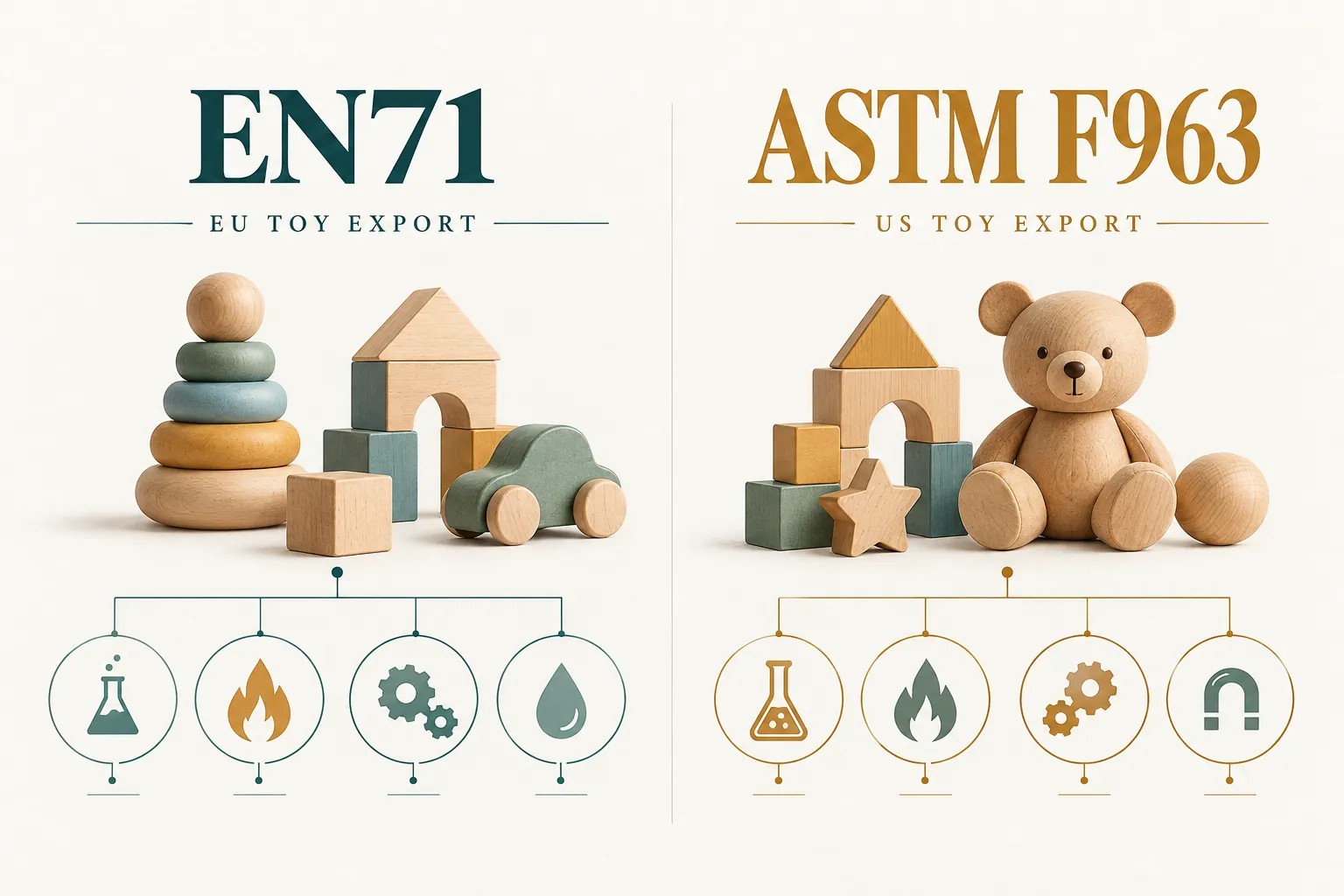
Which Catalog Differences Matter for the Repeat-Order Review?
The PU novelty provides a slow-rebound material starting point, while the busy board provides an ABS material reference; neither catalog description establishes the current finished product's test coverage.
For assortment planning, treat these as separate product configurations rather than interchangeable testing routes. The foam item's material and printed surface deserve their own review. For the board, establish the actual assembly and functions from the approved specification and sample before selecting tests.
| Small Color-Printed Butter Cheese Sticks | Catalog identity: . Recorded material: PU polyurethane, described as slow-rebound foam. Recorded packaging: OPP bag. Reference MOQ: 1,080 units. Recorded carton quantity: 540 units. |
|---|---|
| Space Busy Board | Catalog identity: . Recorded material: ABS. Reference MOQ: 96 units. Recorded carton quantity: 48 units. |
What Must Be Compared With the Previously Approved Toy?
Compare the current bill of materials, construction, finish, and packaging with the previously approved revision before deciding which test evidence can carry forward.
For the slow-rebound item, request confirmation of the foam formulation, colorants, surface printing or coating, material suppliers, and production process. Use the approved physical reference to check rebound behavior and finish as commercial quality characteristics; those observations do not substitute for safety testing.
For the busy board, request a component list and function demonstration identifying attachments, moving elements, fastening methods, and any powered features actually present. The ABS entry alone does not describe every component or establish the complete toy's construction.
Record material, component, supplier, process, color, artwork, packaging, intended-age, and destination changes separately. Require approval of consequential changes before production. This follows the version-matching and change-control approach described in OEM change-control guidance. A change may affect only part of the existing evidence; assess its scope rather than discarding the entire file automatically.
How Often Should Repeat OEM Toys Be Tested?
Approve a written SKU-specific testing schedule with both a next-due point and change-trigger review; do not accept “same as last order” as the plan.
Have the responsible compliance reviewer identify the applicable destination-market requirements, product scope, standard editions, and any required testing schedule. Record additional buyer-requested checks separately. A commercial inspection schedule is not a substitute for that assessment.
For an unchanged configuration, review whether the existing evidence still covers the current construction and whether testing is due under the approved program. For a changed configuration, identify the affected properties and decide what additional testing or technical review is necessary before release.
Assess an existing report by its test dates, methods and editions, tested construction, results, and connection to the present product—not by its issue date alone. Do not impose a blanket report-expiry rule or assume that a new purchase order, internal item number, or production lot automatically requires every test to be repeated.
What Makes an Existing Test Report Usable for This Order?
An existing report is usable only for the scope that can be connected to the current product configuration and applicable requirements.
Request the complete report, including sample identification, photographs, tested materials or components, methods, editions, results, and conclusions. Match it to the current product revision, intended age, labels, and destination. Where a report covers a product family or a differently named model, obtain a documented coverage explanation rather than accepting visual similarity as the link. OEM change-control guidance recommends matching compliance records to the version being produced.
For newly commissioned repeat-lot tests, specify how samples will be selected and identified. When the objective is to assess the current lot, request samples drawn from that lot and record the lot reference, selection date, selector, and laboratory sample identifiers. A development-shelf sample answers a different question.
Keep report review separate from shipment inspection. A laboratory result addresses the submitted samples and stated test scope; inspection compares selected production units with the approved specification.
When Are Photos Enough, and When Is a Physical Sample Needed?
Use controlled photos or video for narrowly defined visual checks on a familiar repeat configuration; request a physical sample when the decision requires feel, color matching, fit, or hands-on function assessment.
A low-risk artwork revision may be reviewed digitally if the buyer and supplier identify the exact file revision and agree what the evidence establishes. New materials, important color matching, difficult branding surfaces, changed mechanisms, or physical packaging fit justify a physical review. This distinction is also made in the Custom Toy Sample Approval Checklist.
For the PU item, a video can demonstrate visible rebound but cannot establish material chemistry or exact feel. For the board, a function video can show the demonstrated operation but does not replace component identification or applicable mechanical testing.
A blank sample does not approve the final logo. A packaging PDF does not prove physical fit. Preserve the approved sample identity, artwork revision, and packaging revision, then compare production against those references. Sample approval defines the target; it does not prove that every bulk unit matches it. Custom Toy Sample Approval Checklist
What Should the Repeat-Order Testing Worksheet Record?
Use one worksheet per product revision and repeat order, assigning each test or evidence item a status of confirmed, required-before-release, or not applicable with a reason.
The entries below establish the catalog baselines and the recommended release gates for the two examples. “Confirmed” applies only to the stated catalog fact, not to current production or test status. For each selected test, record the specified target beside the actual observation or result.
| PU novelty — catalog baseline | Confirmed, catalog scope only: Small Color-Printed Butter Cheese Sticks / ; PU slow-rebound foam; OPP bag; reference MOQ 1,080 units; 540 units per carton. |
|---|---|
| Busy board — catalog baseline | Confirmed, catalog scope only: Space Busy Board / ; recorded material ABS; reference MOQ 96 units; 48 units per carton. |
| Current configuration — both products | Required-before-release: identify the purchase order, production lot, product specification revision, bill-of-materials revision, intended age, destination, artwork revision, and packaging revision. Compare these with the previous approved configuration and record each difference. |
| Mechanical and physical test scope | Required-before-release: obtain the reviewer's applicability decision based on the actual product and intended age. For each selected test, record the standard, edition, clause or method, acceptance requirement, sample identity, actual result, and report reference. Record a reason for each excluded item. |
| Chemical and other material-dependent test scope | Required-before-release: identify the actual foam, resin, colorants, coatings, inks, adhesives, and other relevant materials present. Record the destination-specific assessment, selected tests, acceptance requirements, results, and evidence connecting tested materials or construction to the current version. |
| Existing report coverage | Required-before-release: record report number, laboratory, sample and test dates, issue date, tested version, methods and editions, results, and the coverage assessment for the repeat configuration. State the basis for continued use or the additional evidence required. |
| New-test sample source | Required-before-release when new testing is selected: identify whether samples come from development, pre-production, or the current production lot. Record the selection method, selector, date, lot reference, and laboratory sample identifiers. |
| Reference and bulk comparison | Required-before-release: identify the approved physical or digital reference, define the commercial comparison criteria, and record observed differences. Keep these observations separate from laboratory safety-test results. |
| Next periodic test or review trigger | Required-before-release: record the approved next-due date or production trigger, its basis, the responsible owner, and changes that require earlier reassessment. Separate applicable requirements from additional buyer criteria. |
How Should Color, Logo, Packaging, and MOQ Affect the Reorder?
Quote the unchanged configuration and each proposed customization separately, then review the testing implications of the actual change.
Request the available colors, current availability, reorder conditions, logo method, and final packaging configuration for each product. A catalog color or familiar product name is not an inventory commitment. For the busy board, ask the supplier to identify the exact package type and provide the corresponding packaging revision or sample.
Keep the reference MOQ separate from any quoted custom-color, logo, or packaging minimum. The recorded MOQ for one product does not apply to the other, and carton quantity is not an order multiple. Confirm the quoted sales unit, what it includes, the order quantity, current price, sample arrangements, production timing, and shipment terms for the exact configuration.
Route changes appropriately: an artwork-position change may need a new proof; a new ink, coating, resin, component, or assembly method needs a material or construction review as well. Packaging changes may require fit, labeling, or other relevant assessment. Record the decision rather than treating every visual change as either harmless or a full retest.
Who Can Release the Order, and How Do Open Conditions Close?
The authorized buyer approver should release shipment only after required evidence is accepted against the named product revision and open release conditions are closed.
Use a hold when an essential test result, report-coverage decision, or configuration match remains unresolved. A conditional approval may authorize a clearly limited next step, but it should not waive a required shipment gate. This is a recommended purchasing control, not a substitute for applicable legal requirements.
| Order and revision identity | Record the product name and SKU, purchase order, production lot, specification revision, bill-of-materials revision, approved sample reference, artwork revision, and packaging revision. |
|---|---|
| Target versus observation | For every release condition, record the specified requirement, actual observation or test result, supporting evidence reference, reviewer, and acceptance decision. |
| Release decision | Select release, hold, or release with conditions. State precisely whether the decision authorizes production, packing, or shipment and identify any excluded activity. |
| Responsible approval and date | Enter the authorized approver's name, role, decision date, and the technical or compliance reviewers whose decisions support the release. |
| Condition closure | Assign each open condition an owner and due date. Close it with the evidence reference, acceptance result, closing reviewer, and closure date; communicate the updated authorization to the responsible production or shipment team. |
| Post-approval change | Record any later material, component, supplier, process, color, artwork, packaging, intended-age, or destination change. Decide whether approval must be reopened and whether a new proof, sample, quotation, or testing review is needed. |
APPLY THE GUIDE
Build a quote around the order you plan to place.
Bring the product, destination, expected quantity and date into one brief.
Start a sourcing brief